The problem? Most advertisers either overspend chasing primetime prestige or write off TV entirely as too expensive to justify. Neither approach works.
This guide breaks down 10 actionable TV marketing strategies that direct-response advertisers use to turn TV spend into tracked revenue, not just impressions.
TL;DR
- Streaming now outpaces broadcast and cable, making hybrid TV essential
- Smart media buying (dayparts, network relationships) beats guesswork
- A 90-day test validates your strategy before scaling spend
- Clear CTAs and continuous measurement separate profits from gambles
Overview of TV Marketing in Today's Advertising Landscape
TV Marketing in a Streaming-First Era
Proving which channel actually drives revenue gets harder as audiences fragment across linear, cable, and streaming platforms. TV marketing means using linear broadcast, cable, and increasingly CTV/streaming inventory to build brand awareness and drive direct consumer action, whether that's a phone call, a website visit, or a purchase.
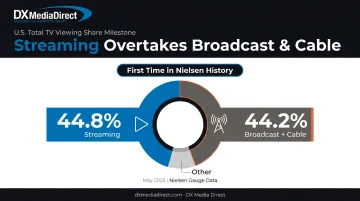
The shift is real. Nielsen's Gauge data showed streaming hit 44.8% of U.S. TV use in May 2025, edging past broadcast and cable's combined 44.2% for the first time in Nielsen's measurement history. That's a milestone, not a death sentence for linear TV.
The strategies below reflect what actually drives ROI today: media-buying tactics that have worked for decades, plus CTV integration and performance measurement built for the current landscape.
10 Proven TV Marketing Strategies to Maximize Your Advertising ROI
These strategies span media buying, creative, targeting, and measurement. They work best combined, not cherry-picked.
1. Prioritize Direct-Response TV (DRTV) Structures Over Pure Brand Awareness
DRTV pairs a clear offer with a trackable response mechanism, meaning a phone number, URL, or promo code. Every dollar spent ties directly back to a measurable action.
This isn't a new idea. AdWeek documented direct-response TV spending growing 25% to $1.2 billion in just five months back in 2005, driven by advertisers who valued its accountability over vague brand metrics. Coca-Cola even used a DRTV structure to drive viewers to its My Coke Rewards website.
DRTV works whether you're acquiring new customers or reinforcing awareness from a bigger brand campaign already in market.
2. Use Strategic Daypart Selection to Reach the Right Viewers at the Right Cost
Early morning, daytime, primetime, and late night each carry different costs and different audience compositions. Matching your offer to the right daypart improves cost-per-response dramatically.
- Primetime costs more and skews toward broader household reach
- Daytime often delivers a more targeted, at-home audience for less
- Late night can convert surprisingly well for certain offers at a fraction of the price
Inexperienced buyers default to primetime because it feels prestigious. Off-peak dayparts frequently deliver comparable conversion at a much lower cost per response.
3. Negotiate Media Rates Through Direct Network Relationships, Not Programmatic Portals
Long-standing relationships with network representatives unlock preferential rates, remnant inventory, and flexible terms that self-serve programmatic platforms simply cannot offer. There's no negotiation layer in an automated portal.
DX Media Direct has spent 35 years building these relationships, accumulating pattern recognition across dayparts and product categories that shapes every media plan. That kind of institutional knowledge doesn't transfer to a dashboard.
The difference shows up in the actual rates you pay, often well below the sticker price on a rate card nobody negotiates against.
4. Run a 90-Day Test Campaign Before Scaling Spend
A structured 90-day test window gathers enough response data across networks and dayparts to make real decisions. Shorter windows produce unreliable data that can mislead your scaling decisions.
This approach builds a repeatable playbook. You learn which networks convert, which dayparts underperform, and which creative resonates, then scale using proven data.
Skipping this step is how businesses end up with six months of spend and no clear answer about what worked.
5. Integrate Connected TV (CTV) and Streaming Inventory Alongside Linear Buys
CTV extends your reach to cord-cutters who rarely see linear ads at all, while offering more precise audience targeting and attribution than linear buys alone.
Given that streaming now claims 44.8% of U.S. TV viewing time, ignoring CTV means missing nearly half your potential audience. A hybrid buy, linear for scale and trust, CTV for precision, covers both bases without abandoning either channel.
6. Pair TV Campaigns with Digital Retargeting to Capture the "Halo Effect"
TV exposure boosts engagement and recall on the digital ads that follow it. This is the halo effect, and it's measurable.
VAB and Effectv analyzed nearly 200 brands and found young brands saw a 138% increase in website traffic during months when TV advertising ran, compared to their pre-TV baseline.
That's a strong signal to sequence your media: run TV first, then hit warmed-up audiences with search and social retargeting while recall is still high.
7. Invest in Creative That Builds Emotional Connection and Trust
Strong storytelling and higher production value drive better recall and perceived credibility than purely feature-based messaging. Nielsen studied 100 ads across 25 FMCG brands and found ads scoring above average on emotional response generated a 23% lift in sales.
Tone matters as much as the message:
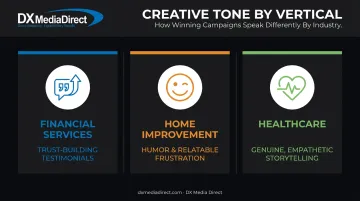
- A financial services spot benefits from testimonial-style trust-building
- A home improvement brand might lean into humor or relatable frustration
- Healthcare creative often performs best with genuine, empathetic storytelling
Match the tone to the category and the audience, not to what's trending on social media.
8. Feature a Clear, Trackable Call-to-Action in Every Spot
Every TV spot should end with one unambiguous next step: a phone number, a URL, or a promo code. Without it, you can't measure what the ad actually did.
Testing multiple CTAs or offers during your media test reveals which one converts best before you commit larger budgets. A single word change in your offer can shift response rates more than a bigger media buy ever will.
9. Use Addressable and Data-Driven Targeting Where Available
Addressable TV technology delivers ads to specific households within linear and cable inventory, reducing the waste inherent in broad demographic buys. VAB defines it as advertising personalized at the household level, not just aimed at a demographic proxy like "women 25-54."
This matters most for advertisers with a defined geographic footprint or a specific customer profile, such as regional service businesses or category-specific retailers.
10. Continuously Measure Performance and Refresh Creative
Ongoing attribution, meaning call tracking, matchback analysis, and unique URLs or promo codes, is what separates an underperforming media mix from underperforming creative. Guessing which one is broken wastes budget on the wrong fix.
Periodically refreshing creative also prevents ad fatigue. Even a great spot loses response over time as the same audience sees it repeatedly. Rotate creative before response rates decline, while the audience is still responsive.
How to Choose the Right TV Marketing Strategy for Your Business
The right combination depends on your goals (brand awareness versus direct response), your budget, and your sales cycle length. There's no single formula that fits every business, but the wrong approach tends to repeat the same costly mistakes.
Common mistakes to avoid:
- Chasing primetime for vanity reasons instead of cost-per-response
- Skipping the test phase and scaling based on gut feeling
- Judging performance on impressions instead of tracked calls, clicks, or sales
Start with a modest test budget and a media partner who can diagnose whether underperformance stems from your media mix or your creative, rather than guessing at fixes.
If you don't have in-house media-buying expertise, you'll benefit from partnering with a full-service, direct-response focused agency. Agencies with established network relationships can secure rates and dayparts unavailable through self-serve platforms.
DX Media Direct offers a free, no-obligation consultation to assess your current media mix and creative before you commit to a scaled campaign. You'll know within weeks whether your media mix or your creative needs the fix.
How Much Does TV Marketing Cost? Budgeting Considerations
TV costs vary widely based on market size, daypart, network tier, and whether you're buying national, regional, or local inventory. There's no flat rate card that applies everywhere.
For context, 2025 prime-time upfront estimates put:
| Inventory Type | Adult CPM | Year-Over-Year Change |
|---|---|---|
| Broadcast | $43.50 | -4.1% |
| Streaming | $27.25 | -8% |
| Cable | $19.35 | -6% |
These figures show TV, particularly cable and streaming, can be more cost-effective than commonly assumed once you move past prime-time broadcast pricing.
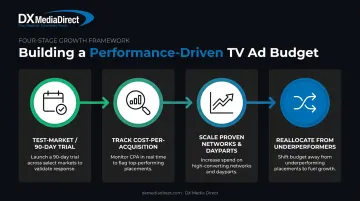
Turning these baseline rates into an actual budget calls for a phased, test-and-scale approach — similar to the 90-day model DX Media Direct runs with new TV clients:
- Start with a test-market or 90-day trial spend across select dayparts
- Track cost-per-acquisition closely throughout the test window
- Scale spend into the networks and dayparts that prove out
- Reallocate away from underperforming inventory as data comes in
This keeps risk contained while the data proves out the right mix.
Conclusion
No single tactic makes TV marketing work. It's the combination of smart media buying, strong creative, and continuous measurement that turns ad spend into tracked revenue.
Evaluate any TV strategy or agency partner based on tracked performance and scalability, not reach alone and not brand prestige. Impressions don't pay the bills; conversions do.
Ready to build a TV strategy backed by real data instead of guesswork? Request a free consultation from DX Media Direct and put 35 years of direct-response advertising expertise to work for your next campaign.
Frequently Asked Questions
What is TV marketing?
TV marketing is advertising delivered through linear, cable, or CTV/streaming inventory to build awareness and drive direct consumer action. It spans everything from primetime broadcast spots to targeted streaming ads.
How much does TV marketing cost?
Cost depends on market size, daypart, and network tier, ranging from under $20 CPM on cable to over $40 on broadcast primetime. A test campaign helps establish a realistic budget before scaling.
Is TV marketing still effective in the streaming era?
Yes. TV still delivers strong reach and trust, and a hybrid linear-plus-CTV approach now maximizes effectiveness by covering both traditional viewers and cord-cutters in one strategy.
What's the difference between TV marketing and CTV advertising?
Linear TV marketing refers to traditional broadcast and cable buys sold on broad demographic estimates. CTV advertising delivers ads through streaming platforms with more precise, often household-level targeting and stronger attribution.
How long should a TV marketing test campaign run?
Roughly 90 days. That window gathers enough response data across dayparts and networks to build a reliable, scalable playbook instead of acting on incomplete information.
Why is direct-response TV advertising often more cost-effective than programmatic platforms?
Relationship-based media buying secures inventory and rates that automated, portal-based platforms structurally cannot access. Decades of network relationships translate into negotiating leverage no algorithm can replicate.