This comparison matters because the answer affects real budget decisions. Cost-per-lead, attribution accuracy, and how fast you can test a new offer all shift depending on which format you choose. Get it wrong, and you're either overpaying for reach you can't measure or underinvesting in a channel that would have scaled beautifully.
The stakes are growing on both sides. U.S. digital-video ad spend jumped 18% to $64 billion in 2024, with CTV returning to double-digit growth after a slower 2023, according to IAB. Meanwhile, linear TV hasn't gone quiet. This article breaks down cost, targeting, attribution, and actual lead-generation performance so you can decide where your next ad dollar belongs.
Key Takeaways
- Digital TV (CTV/OTT) offers precise targeting and cleaner, faster lead attribution.
- Linear TV still delivers massive reach and trust, yielding higher lead volume.
- No format wins universally on cost-per-lead; outcomes depend on offer and creative.
- The best campaigns blend both: linear for scale, digital for targeted follow-up.
Digital TV Ads vs Linear TV Ads: Quick Comparison
Before picking a side, look at how these two formats actually differ in practice. The table below breaks down the five factors that matter most for lead generation.
| Factor | Digital TV Ads (CTV/OTT) | Linear TV Ads |
|---|---|---|
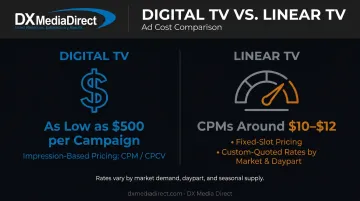
| Cost | Impression-based CPM/CPCV pricing; entry points as low as $500 per campaign on some platforms | Fixed-slot pricing tied to market, network, and daypart; higher upfront commitment, no published minimum |
| Targeting | Household and device-level targeting by demographic, behavior, and location | Broad reach through channel/daypart selection; no granular filtering without addressable insertion |
| Attribution | Real-time impression, click, and conversion tracking tied to devices | Relies on call tracking, promo codes, vanity URLs, and modeled response curves |
| Speed | Launch, pause, or optimize campaigns within days | Requires advance booking and locked schedules once confirmed |
| Ad Response | Clickable CTAs, QR codes, interactive overlays on connected devices | Phone numbers, URLs, and promo codes displayed or read aloud |
A few of these numbers deserve context. That $500 minimum comes from Disney's Campaign Manager platform, one of the few publicly documented entry points for CTV inventory. Linear buys, by contrast, are almost always custom-quoted based on your target audience and market size, with pricing shaped further by your relationship with the network rep.
One caveat on CPMs: trade reporting suggests linear rates can sometimes run around $10-$12, while CTV CPMs are often "substantially higher," per Adweek. But these are directional observations, not fixed rate cards. Your actual cost depends heavily on who's buying and how well they know the inventory.
What Is Digital TV Advertising & What Is Linear TV Advertising?
Digital TV Advertising
Digital TV advertising covers CTV, OTT, and addressable TV, all delivered over an internet connection rather than a broadcast signal. For direct-response marketers, the appeal comes down to precision. You're not paying to reach everyone watching a channel; you're paying to reach the households most likely to convert.
That precision translates directly into lead-gen efficiency. Less wasted spend on unlikely converters means a tighter cost-per-lead, at least on paper, since every impression is theoretically tied to a qualifying household.
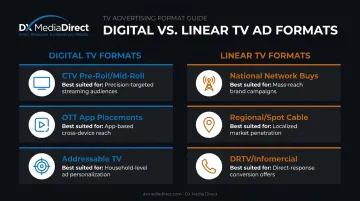
Digital TV breaks down into a few subtypes:
- CTV pre-roll/mid-roll: Ads served before or during streaming content on devices like Roku or smart TVs
- OTT app placements: Video ads within specific streaming apps such as Hulu or Peacock
- Addressable TV: Different households watching the same program receive different ads, based on audience data
Best suited for: performance marketers running frequent creative tests, subscription and app-based businesses, and advertisers who need fast iteration cycles without locking into a long-term media commitment.
Linear TV Advertising
Where digital TV leads with targeting, linear TV leads with reach and trust. It means scheduled programming delivered through broadcast, cable, or satellite, watched live as it airs, the format most people still picture when they hear "TV commercial."
Its lead-gen value comes from two things: mass reach and credibility. A well-placed spot during a trusted program can drive a spike in call volume during and immediately after airtime, a pattern direct-response advertisers have relied on for decades. Linear variations include:
- National network buys: Broad distribution across a network's full national audience
- Regional/spot cable: Commercial time in selected local markets or DMAs
- DRTV/infomercial formats: Long-form commercials built specifically to drive an immediate response
Best suited for: direct-response offers with a strong, simple call-to-action, categories like insurance, finance, and healthcare where trust signals matter, and campaigns aiming for national-scale lead volume.
Digital TV Ads vs Linear TV Ads: Which Drives More Leads?
Here's the honest answer: the channel label itself doesn't determine lead volume. What actually drives results is a combination of factors:
- Targeting precision (how well you're reaching people who want your offer)
- Attribution clarity (whether you can prove a lead came from this specific spot)
- Offer type (impulse purchase vs. considered purchase)
- Creative response mechanism (is the CTA clear and easy to act on?)
Digital TV tends to produce more traceable leads per dollar, because device-level attribution lets you see exactly which impression led to which click. But it often comes with lower completion rates and a smaller reach ceiling. You're targeting tightly, which means you're also excluding a lot of potential responders by design.
Linear TV can generate a larger raw volume of leads through sheer reach and perceived credibility, especially with older or trust-sensitive audiences. The tradeoff: attribution is modeled through call tracking, promo codes, and response-curve analysis rather than exact device data. You're inferring cause and effect, not observing it directly.
There's one thing most public comparisons get wrong: cost-per-lead numbers are only meaningful when tested under matched creative and offer conditions. Compare a polished, tested linear spot against a rushed CTV creative and you'll get skewed results that favor whichever format got the better execution, not the better channel.
A Situational Framework
Choose based on your actual goal, not the format's reputation:
- Choose Digital TV if you need fast testing, tight targeting, and granular attribution on a smaller budget.
- Choose Linear TV if you have proven direct-response creative and want to scale it for high call/lead volume nationally.
This is exactly where experience matters more than theory. When a campaign underperforms, the real diagnostic question is whether the problem sits in the media mix or the creative execution.
An agency that has run thousands of direct-response TV campaigns can usually spot that difference within a few weeks of airtime. That diagnosis then determines whether you adjust targeting, network mix, or script. DX Media Direct has built this pattern recognition over 35 years of buying direct-response media across both formats.
Real-World Example: Turning TV Airtime Into Measurable Leads
To see how this plays out, consider a scenario typical of the campaigns DX Media Direct structures for clients moving off unpredictable digital-only spend. (This example illustrates a common test structure, not a single disclosed client engagement.)
The challenge: A mid-sized advertiser had relied on programmatic CTV placements for a year. Lead volume swung unpredictably month to month, with no clear read on which networks or dayparts drove the strongest response.
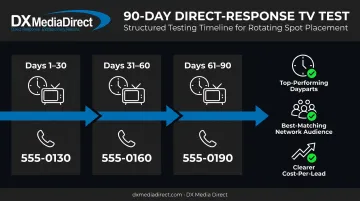
The shift: Rather than tweaking the digital mix further, the team launched a structured 90-day direct-response TV test across a handful of specific dayparts and cable networks. Each spot rotation received its own dedicated call-tracking number.
What this structure typically reveals within a 90-day window:
- Which dayparts produce the highest qualified call volume
- Whether a specific network audience matches the offer better than others
- A clearer, comparable cost-per-lead figure once creative variables are held constant
The real lesson: campaigns built on a clear, repeatable testing playbook consistently outperform one-off media buys, regardless of format. That structure replaces guesswork with a pattern you can scale.
If your current lead flow feels inconsistent, you may not know whether the problem is your media mix or your creative. A free, no-obligation consultation with DX Media Direct can pinpoint the fix before you spend another quarter guessing.
Conclusion
Neither Digital TV nor Linear TV universally drives more leads. The winner depends on your offer, how tightly you need to target, how strict your attribution requirements are, and even how you define a "lead" in the first place. A finance brand chasing trust-driven phone calls will weigh these factors very differently than a subscription app running rapid creative tests.
What separates strong performers from the rest is discipline, not the channel they picked. They test methodically, track cost-per-lead by channel, and adjust creative and media independently instead of blaming the whole campaign when one piece underperforms.
Businesses that build that habit tend to see stronger, more repeatable lead generation over time, no matter which side of the TV divide they're buying on.
Frequently Asked Questions
What is the difference between TV ads and digital ads?
TV ads (linear) air on scheduled broadcast or cable slots to a broad, untargeted audience. Digital TV ads run on internet-connected platforms with precise targeting and real-time performance data tied to specific devices.
What are examples of digital ads?
Common examples include CTV pre-roll and mid-roll ads on Hulu or Roku, addressable TV ads on smart TVs, and interactive formats like pause ads or shoppable overlays on platforms such as Peacock and Tubi.
Is linear TV still effective for lead generation in 2025?
Yes, especially for direct-response offers with strong calls-to-action and trust-dependent categories like insurance or healthcare. Broadcast and cable still made up 44.2% of U.S. TV usage as of May 2025, according to Nielsen's national ratings data.
How is CTV different from linear TV advertising?
CTV enables device-level attribution and dynamic ad swaps, letting advertisers change creative by audience segment mid-campaign. Linear TV can't match that flexibility, relying instead on broad demographic estimates from panel-based ratings.
Which is cheaper: digital TV ads or linear TV ads?
Digital TV ads typically have lower entry costs, sometimes starting around $500 per campaign. Linear TV requires a higher upfront investment but can deliver a lower cost-per-lead at scale when negotiated well.
How do you accurately track leads generated from TV advertising?
Use unique promo codes, dedicated phone numbers, and vanity URLs tied to specific spots, paired with call-tracking software. This works for both linear and digital TV, regardless of format.